
ICF walls & concrete slabs. Poured to perform.
From garage floors and shop pads to full ICF foundations and walls, Boulder & Beam handles the stages that decide how concrete performs — base prep, reinforcement, placement, finishing, and curing — across Owen Sound & Grey-Bruce.
Six ways we put concrete to work.
Whatever the pour, it gets the same fundamentals: a stable, compacted base, the right thickness and reinforcement for the load, proper slope and drainage, clean finishing, and disciplined curing.
Concrete pairs naturally with the rest of what we build — garages and outbuildings, patios and outdoor living, and full renovations & additions — anywhere in our Grey-Bruce service area.
ICF walls & foundations
Insulated concrete form walls for basements, frost walls, and full building shells — exceptional strength and energy performance in one assembly. We build with Nexcem and Logix Element.
Footings & foundations
Structural concrete with careful layout, proper depth, and reinforcement to suit site conditions — the base the whole structure depends on.
Garage & shop floors
Floors designed for real loads. Base compaction, reinforcement, joint layout, and curing get full attention, so the slab stays solid and usable for years.
Slabs & pads
Pads for sheds, equipment, hot tubs, and outbuildings — stable base prep with the right thickness, reinforcement, and finish for long-term durability.
Patios
Functional outdoor concrete with finishes suited to your space — prepped and sloped so patios shed water properly and hold up to seasonal cycles.
Walkways
Clean, durable concrete for high-traffic areas. Grading and drainage come first, to reduce heaving, pooling, and premature cracking.
Our own crew pours concrete work under 4′ in depth and the custom pours other outfits pass on, and builds foundation walls 4′ and taller as insulated concrete forms — with CMU block as an option where it suits. For anything beyond that, we bring in trusted subcontractors and manage the work to our standard — so there’s no concrete scope or project we can’t take on.
One wall that does five jobs.
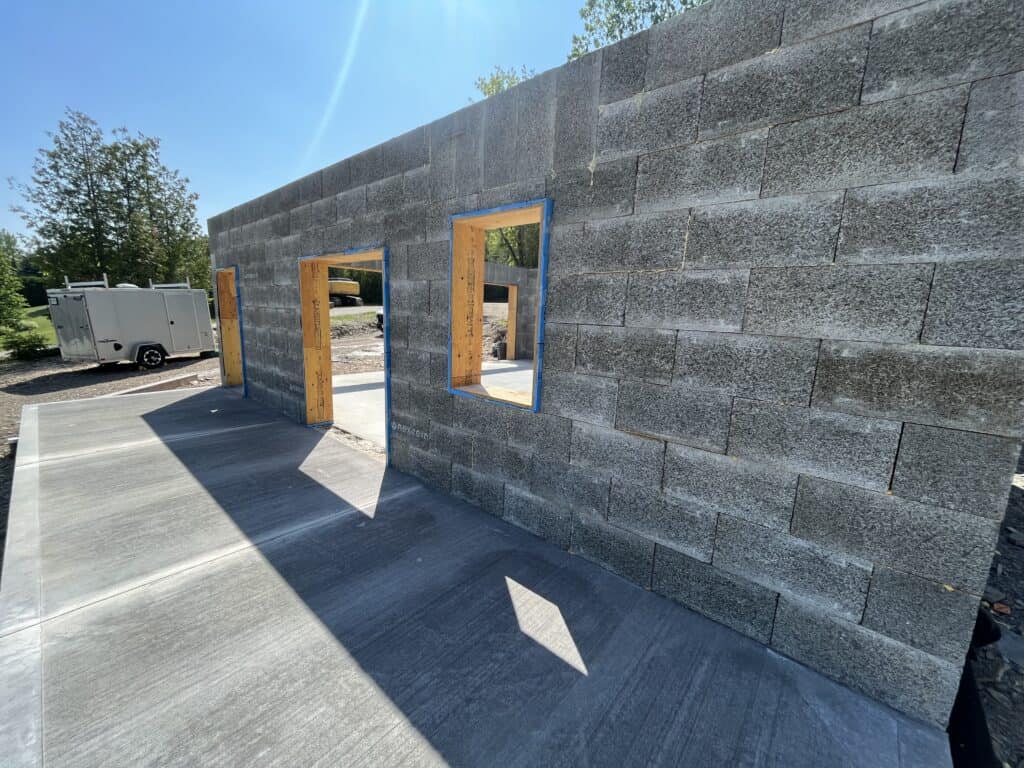
ICF stands for insulated concrete forms — forms that stay in place after the pour, so the finished wall is structure, insulation, air barrier, sound control, and thermal mass in a single system. It’s one of the highest-performing ways to build, and it’s simple enough to be reliable.
The idea is easy to picture: conventional forms get stripped off and hauled away once the concrete cures. ICF forms stay put — becoming permanent insulation on both faces of a reinforced concrete wall. One assembly, one step, and the wall comes out strong, insulated, and airtight all at once.
What that means day to day: indoor temperatures hold steady through every season, so heating and cooling cost less. The thick, massive walls keep outside noise outside. And with no wood in the wall, there’s nothing to rot, mold, or feed pests — less maintenance over the life of the building. It’s why ICF works for everything from homes and cottages to shops and commercial buildings, and why it keeps paying back long after the pour.
Strength that lasts
A reinforced concrete core handles wind, snow, and structural loads that conventional framing has to work hard to match — and it can’t rot, warp, or feed pests. The building stands solid through decades of Grey-Bruce weather.
Efficiency built in
Continuous insulation on both faces, an unbroken air barrier, and the thermal mass of concrete keep indoor temperatures steady — which means lower heating and cooling bills and comfort in every season.
Quiet & healthy inside
Thick, massive walls block outside noise, and the assembly resists the moisture problems — damp, mold, rot — that plague conventional basements. A quieter, drier, healthier space over the life of the building.
We’re particular about forms. Nexcem — cement-bonded wood-fiber ICF — and Logix Element are the two systems we love and trust on our projects. Check them out.
Performance is decided before the truck arrives.
Cracked, heaved, or dusting concrete almost always traces back to a corner cut early — a soft base, missing reinforcement, no joint plan, rushed curing. We do the unglamorous stages properly so the finished surface stays that way.
Assess
We review the site, access, drainage, and end use — what the concrete has to carry, shed, and survive decides everything downstream.
Prepare
Material and finish choices, drawings and permits where needed, then excavation, base material, compaction, grading, and forms — stable and properly sloped before any concrete shows up.
Reinforce & pour
Reinforcement placed for the application — fiberglass rebar in most cases, steel and mesh where specified — then careful placement, planned joints, and clean finishing.
Strip & protect
Forms come off at the right time, and curing is handled to the project’s requirements — cutting, washing, sealing, or waterproofing as the job calls for.
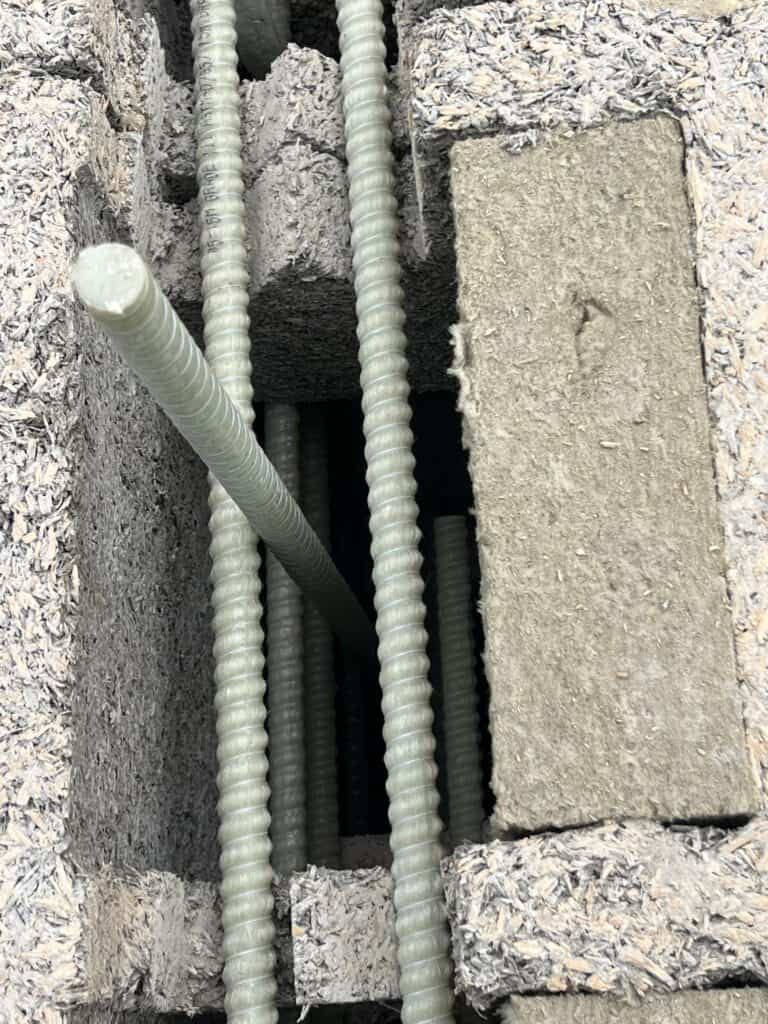
In most applications we reinforce with fiberglass rebar instead of steel. It can’t rust — so it can’t expand and crack the concrete from the inside as the years go by — and it’s light and clean to place, which makes for better installs. Where a design specifies steel, we use steel.
From the jobsites.
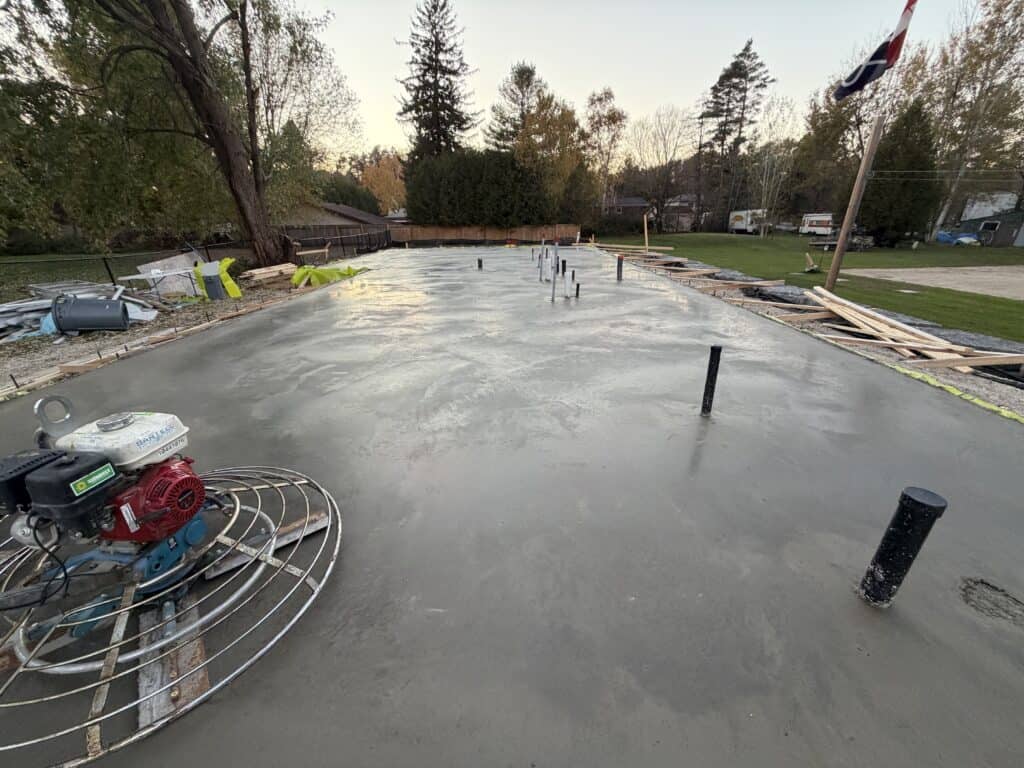
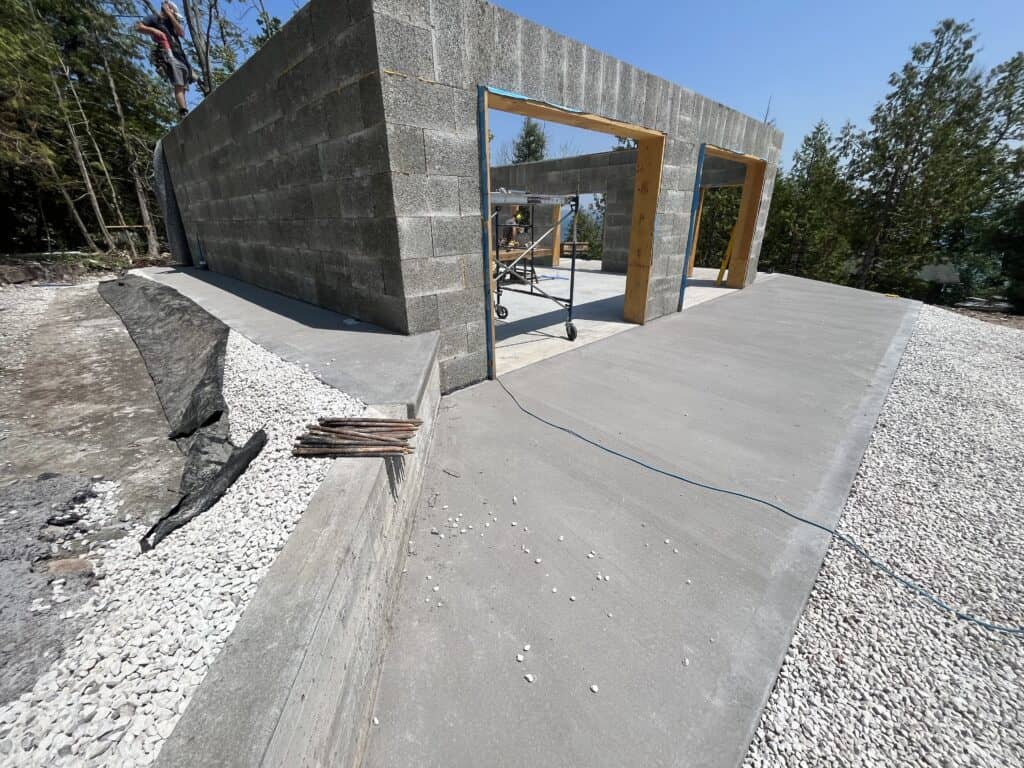
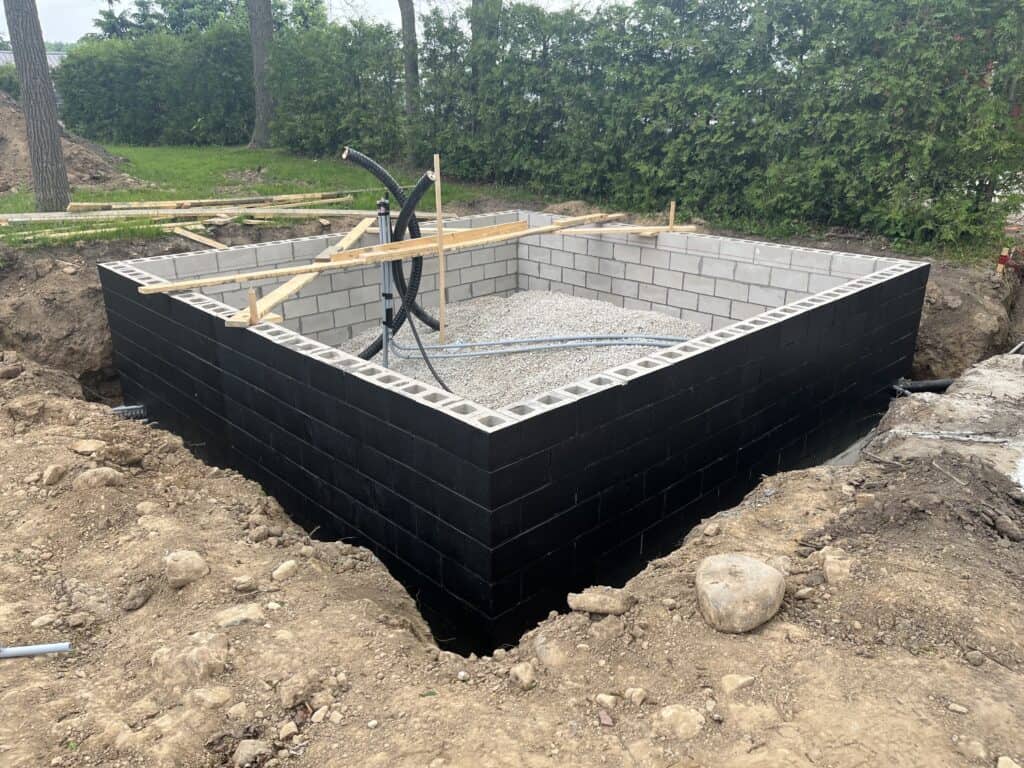
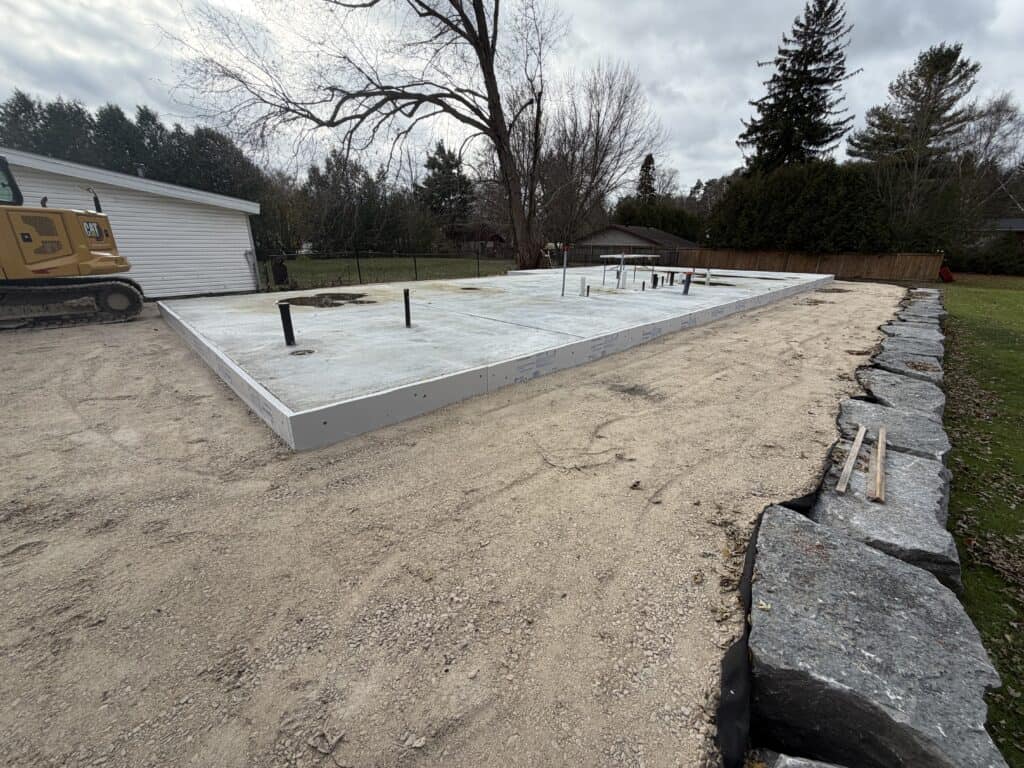
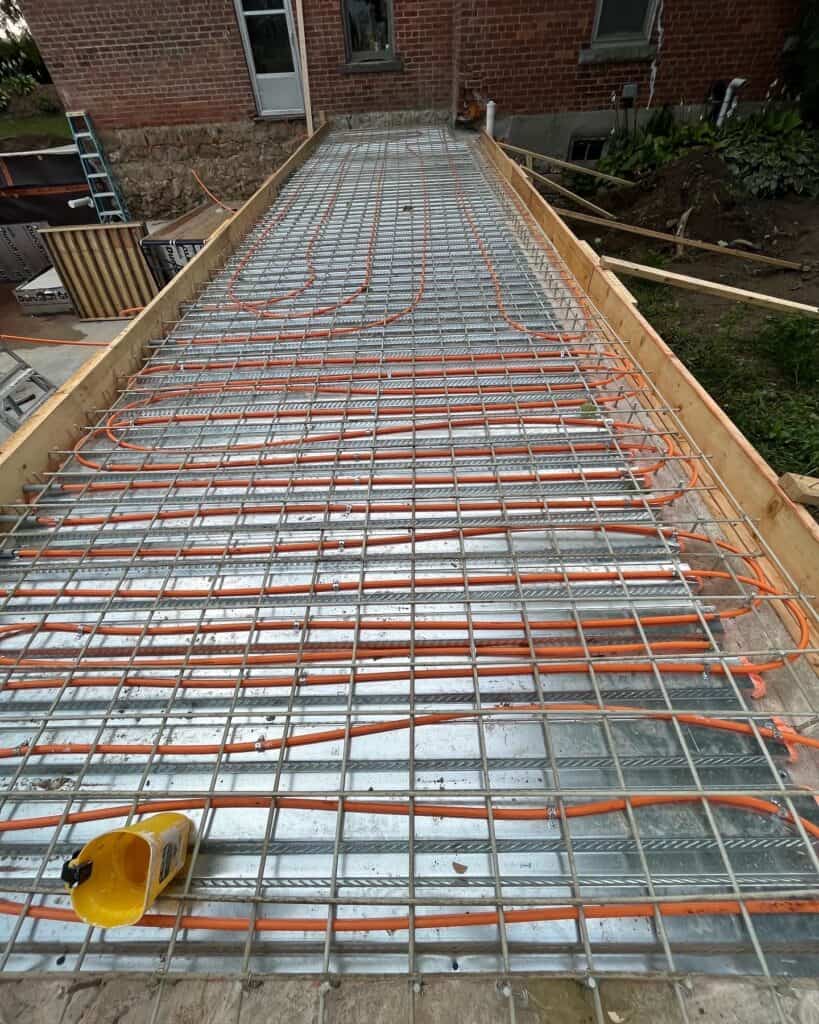
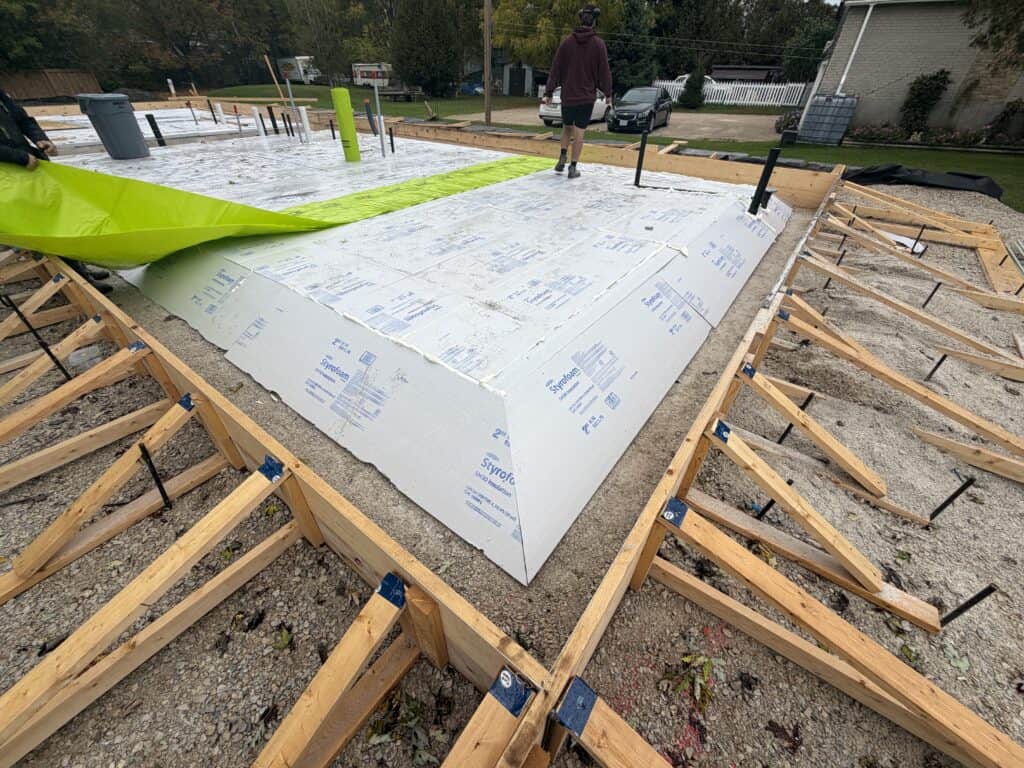
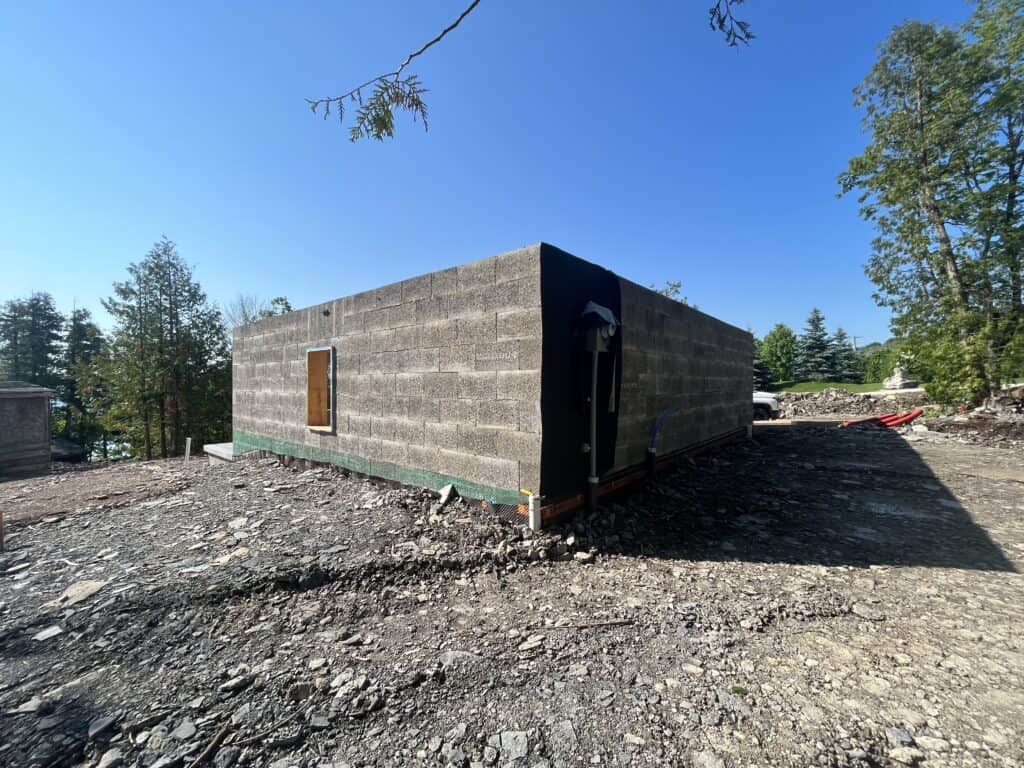
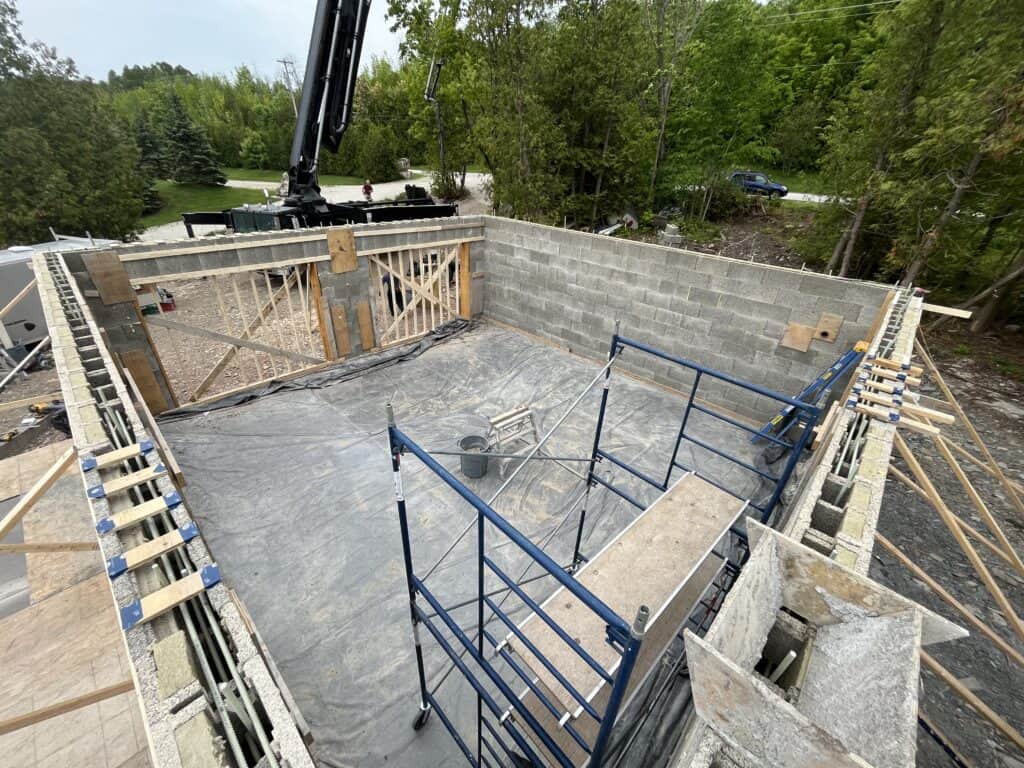
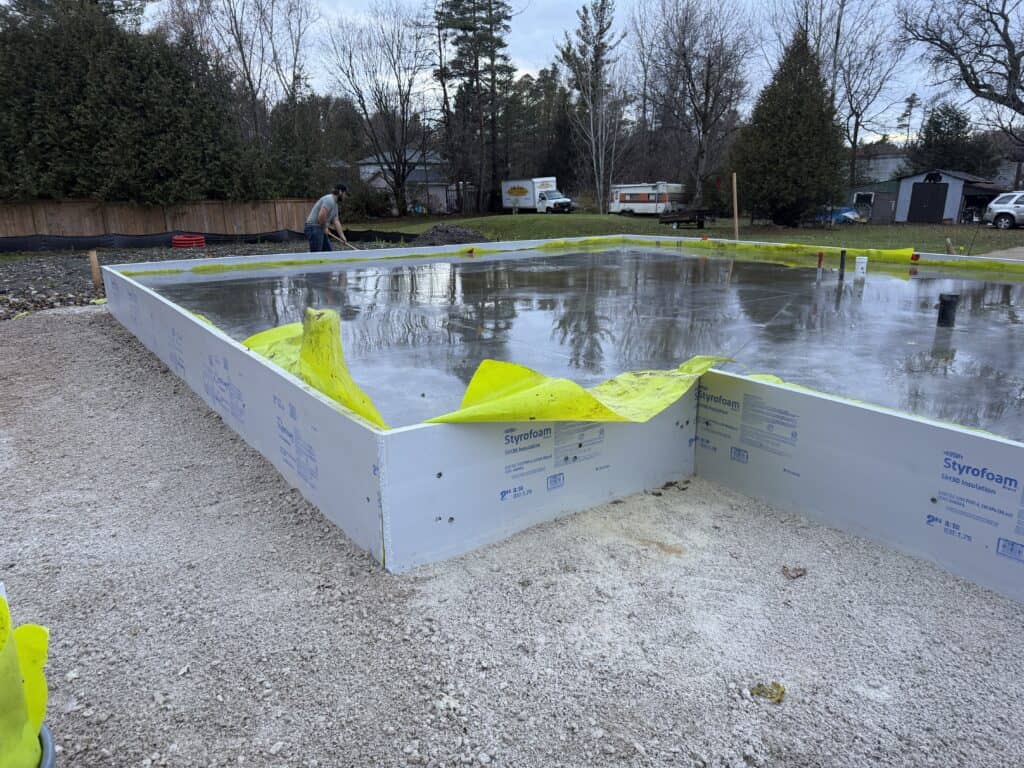
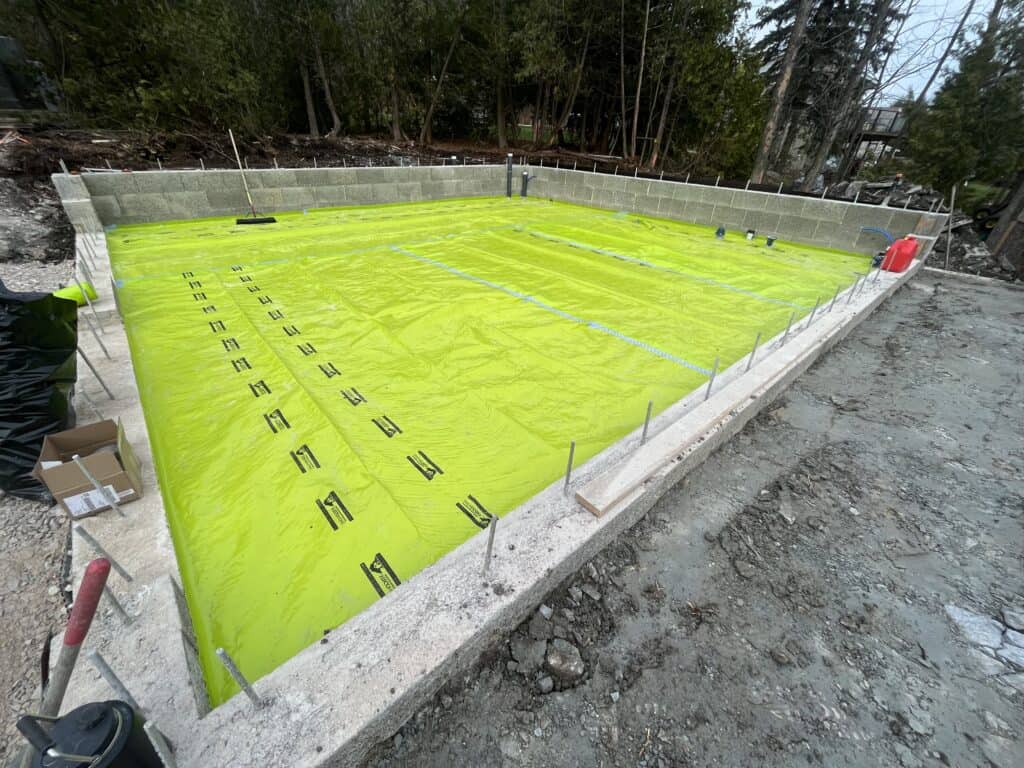
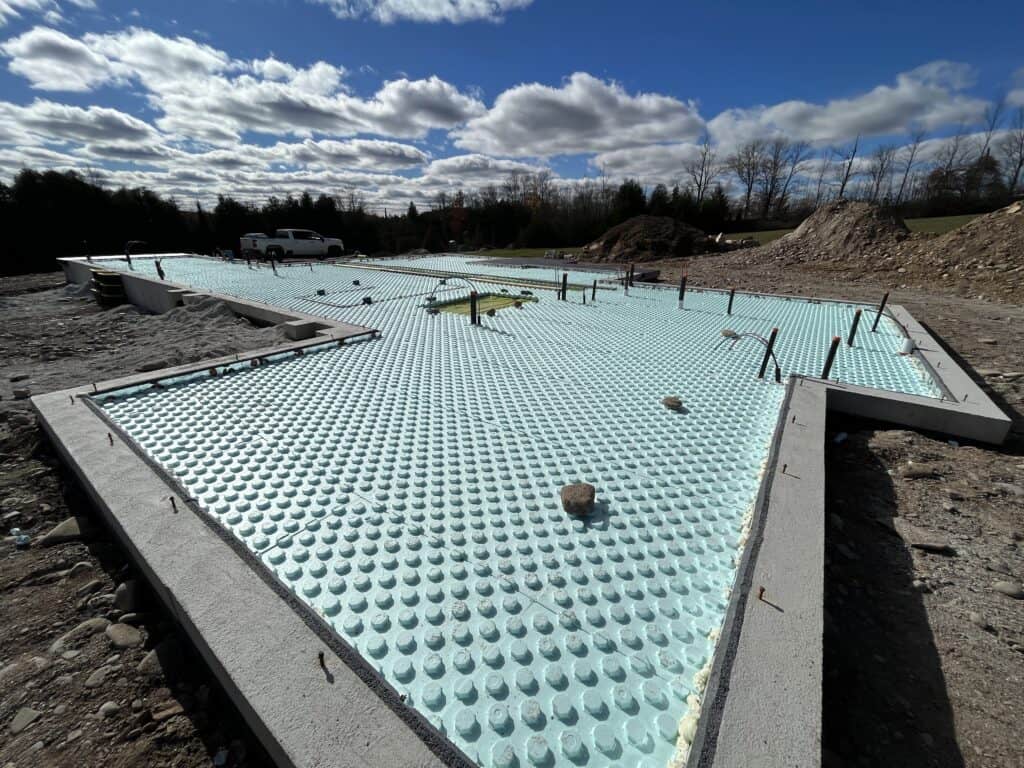
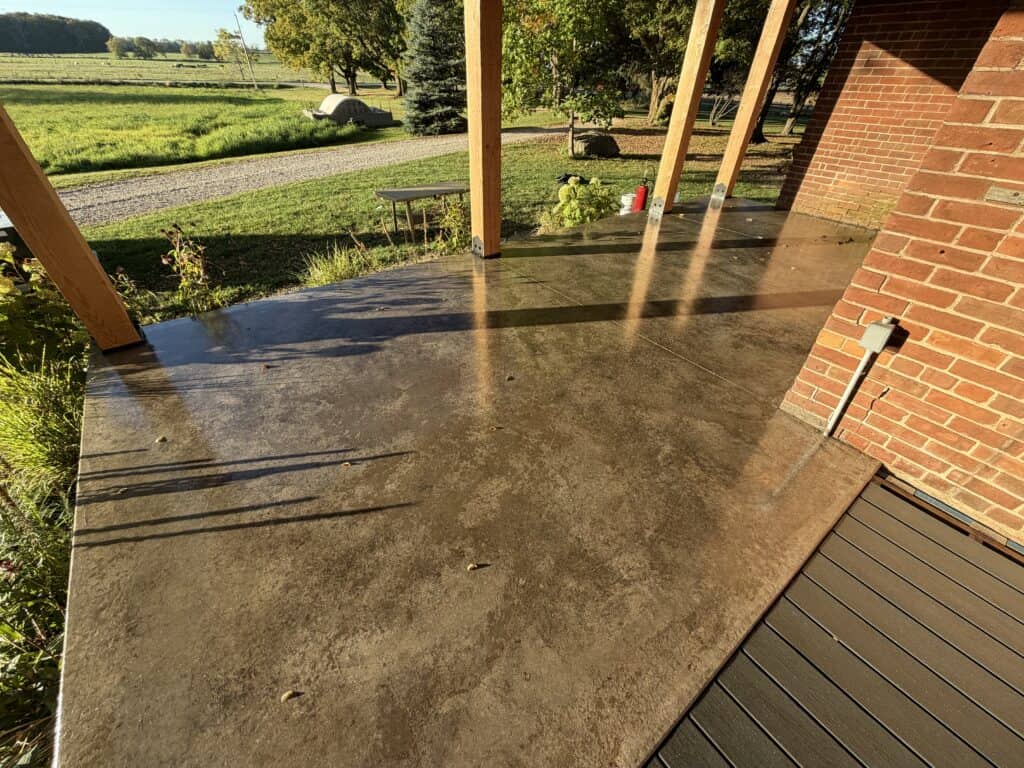
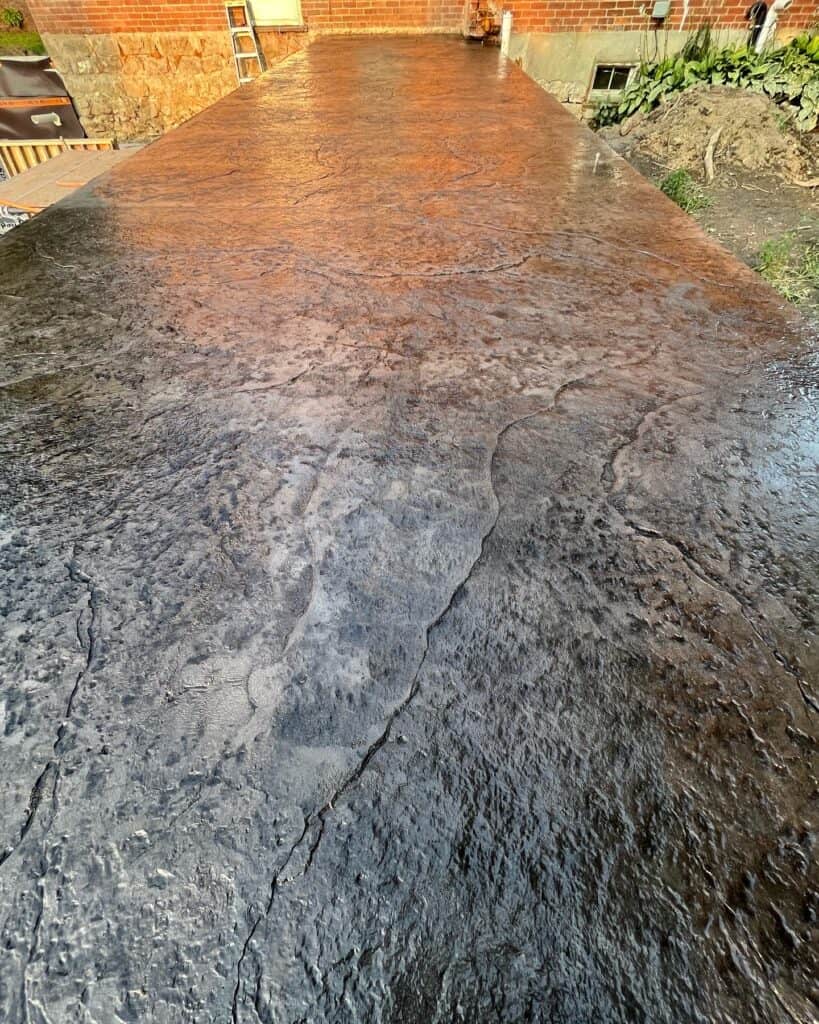
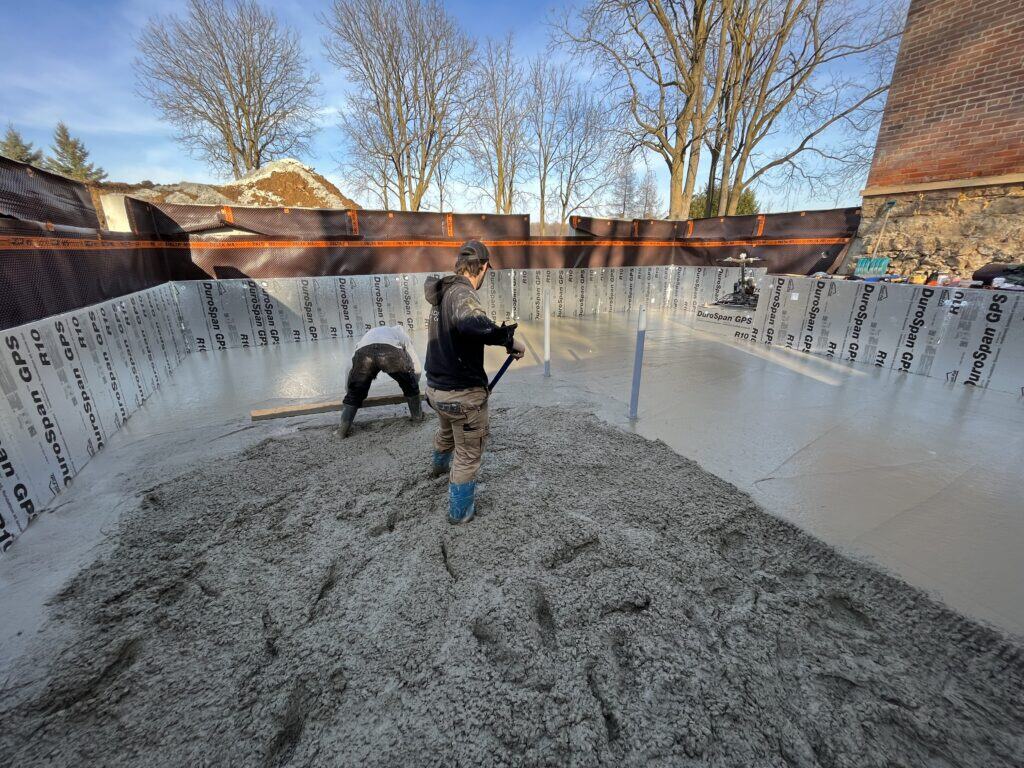
ICF walls, slabs, floors, and finished flatwork on real Grey-Bruce projects. Click any photo to enlarge.
MORE ON THE PROJECTS PAGE →
Straight answers on concrete.
Q1What is ICF, in plain terms?+
Q2Do you build full ICF basements and foundations?+
Q3Why do you use fiberglass rebar?+
Q4What makes concrete last in Grey-Bruce?+
Q5When can you pour concrete?+
Q6Is ICF worth the cost compared to wood framing?+
Planning a pour
or a whole shell?
Tell us what you’re building and get a straight answer on scope, budget, and timing — from the crew that will actually do the work.
OR CALL (519) 387-1597